
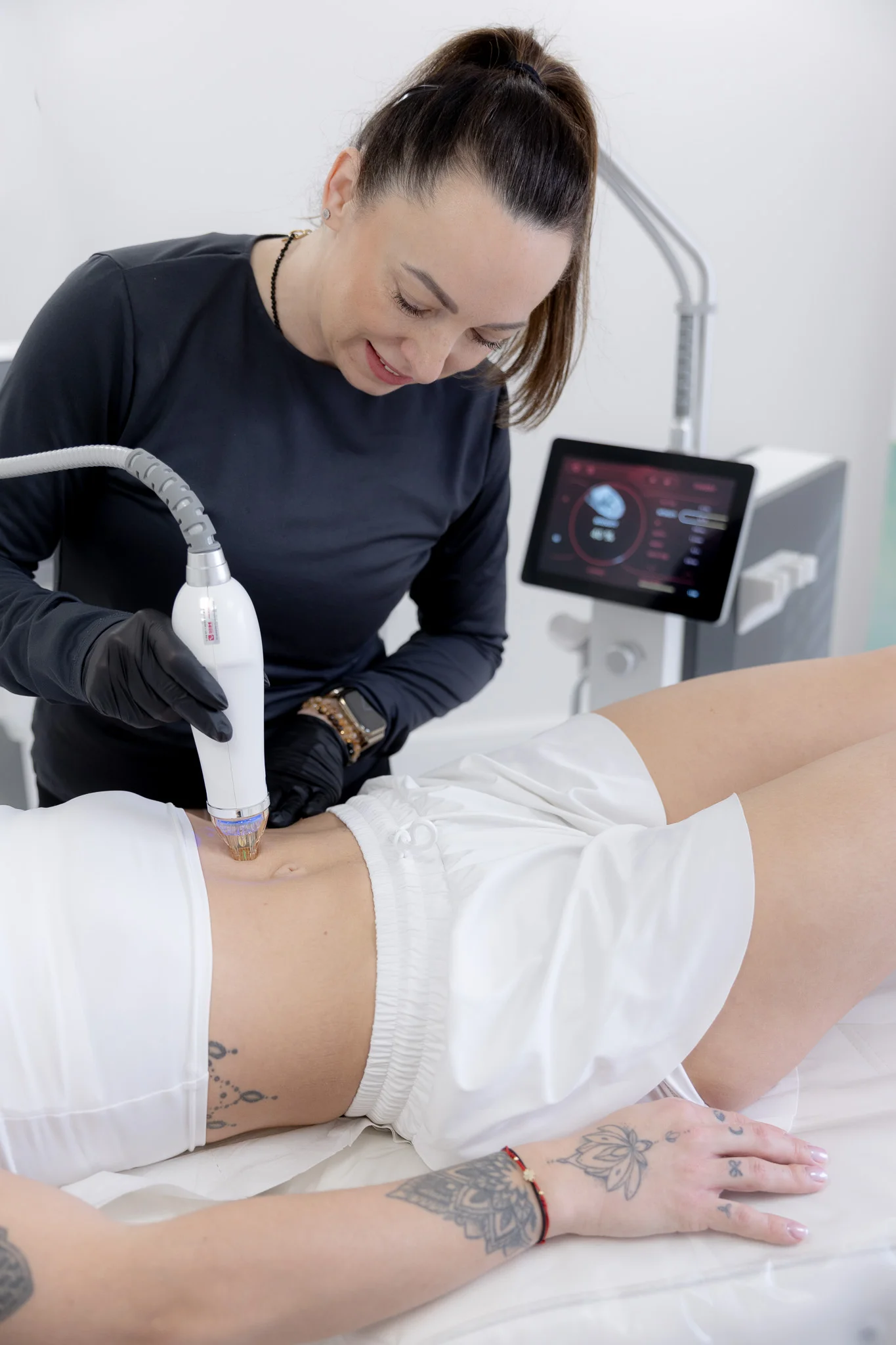
Microneedling is everywhere, from clinics to at-home rollers. The clinical version is a genuinely useful treatment — but it is not magic, and the at-home version is a different thing entirely.
How it works
A device creates many tiny, controlled micro-injuries in the skin. This is designed to prompt the skin's natural repair response, which over time can support collagen and improve texture. Because it relies on your own healing, results build gradually across a course.
What the evidence supports
Clinical microneedling is most associated with improvements in skin texture, the appearance of some scarring, and overall tone. It is a 'skin quality' treatment rather than a way to add volume or lift.
What it doesn't fix
It will not replace volume, tighten significant laxity on its own, or remove deep static lines. Managing expectations is half the result — anyone promising dramatic overnight change is overselling.
Where RF microneedling changes things
Radiofrequency microneedling adds heat energy at depth, which is designed to give a firmer, more remodelling effect than needling alone. It suits some concerns better, but also means more careful assessment and aftercare. Results vary from person to person and are not guaranteed.